Choosing an electric kettle in Canada
Capacity, power on 120 V, variable temperature for tea, materials, descaling hard water and safety — a practical guide to buying an electric kettle in Canada.
Choosing an electric kettle in Canada
In winter a kettle is also a humidity helper, a hot-water-bottle filler and the start of every tea, coffee and instant oatmeal. Here's how to choose one that boils fast, lasts and doesn't fill up with scale.
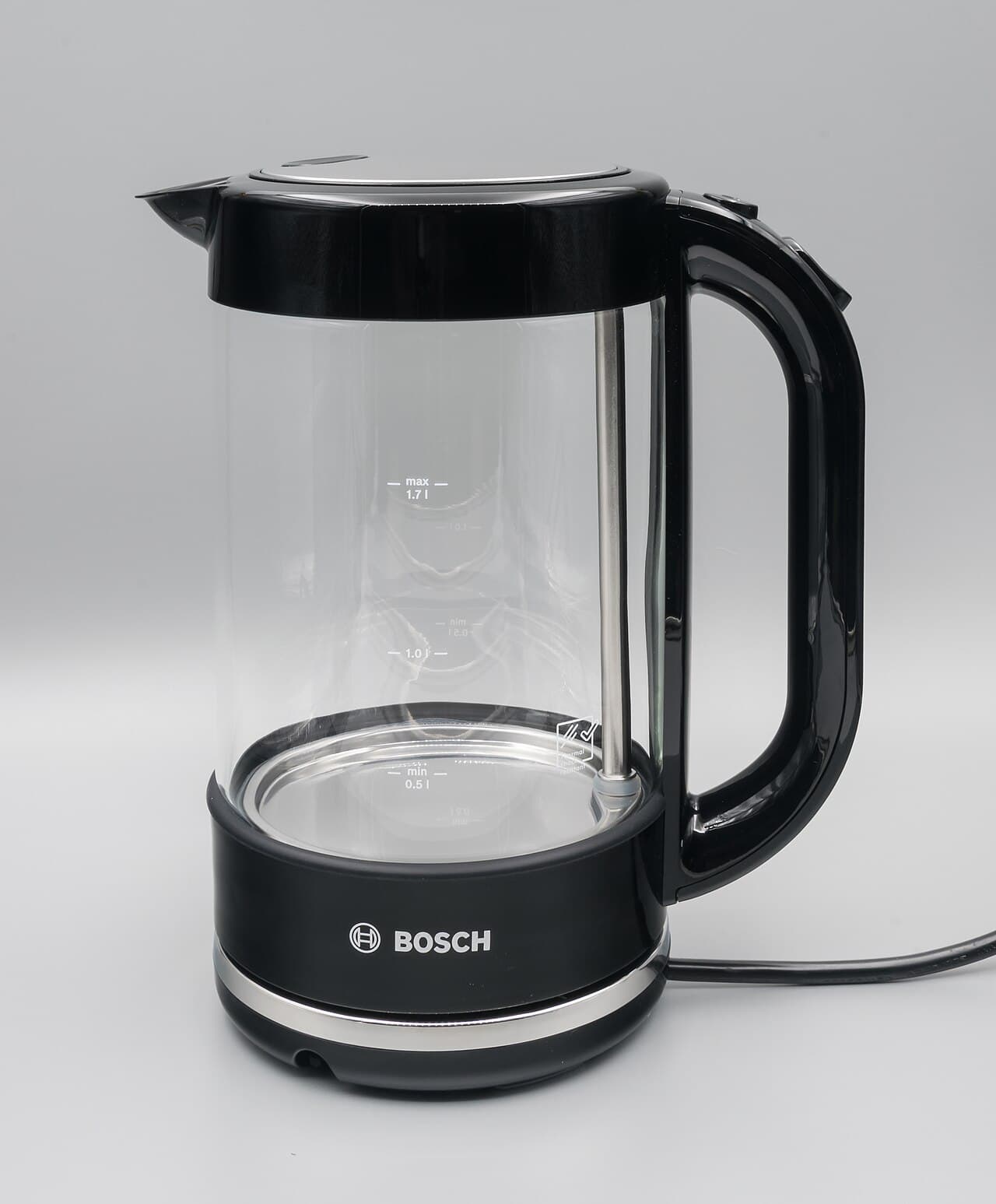 An electric kettle on a 360° base. Photo: Wikimedia Commons (credit at the end).
The short version
- In Canada kettles run on 120 V, so they max out around 1,500 W: a full 1.7 L kettle takes about 4–5 minutes. Boil only what you need.
- 1.7 L suits most households; 1 L or less is fine for one or two people.
- Variable temperature is worth it if you drink green, white or oolong tea or use a pour-over coffee setup.
- Prefer stainless steel or glass with a hidden heating element; check that the water path isn't mostly plastic.
- Look for automatic shut-off and boil-dry protection, and a cUL or CSA certification mark.
- Descale regularly if you live in a hard-water area (much of Ontario, Manitoba, Saskatchewan and Alberta).
Why kettles boil slower in Canada than in Europe
European and UK kettles run on 230 V and draw up to 3,000 W, which is why British friends boast about 2-minute boils. A standard Canadian 15 A household circuit at 120 V limits small appliances to about 1,500 W, so even the best kettles here take roughly twice as long for the same volume. The practical lesson: don't fill the kettle to the top for one cup. Many kettles have a cup scale on the window; use it.
Capacity
| Household | Suggested capacity |
|---|---|
| 1 person / office desk | 0.8–1.0 L |
| 2–3 people | 1.2–1.5 L |
| Family, frequent tea drinkers | 1.7 L |
| Camping or cottage on a generator | Small, low-wattage (600–1,000 W) or stovetop |
Note the minimum fill line too: some large kettles need 0.5 L to run, which wastes energy if you only want one mug.
Materials
Stainless steel
Durable and common. Look for a concealed (flat) heating element — it's easier to clean than an exposed coil. Exterior can get very hot unless it's double-walled.
Glass
You can see the water and scale building up; often lit by an LED during boiling. Heavier, and the lid and filter are usually still plastic.
Plastic
Light and cheap, and many are BPA-free, but some people notice a plastic taste, especially when new. If you prefer to minimize plastic contact, choose a steel or glass body with a steel lid inner.
Gooseneck
A slim spout for precise pour-over coffee. Usually 0.8–1.0 L and often with temperature control.
Variable temperature: who needs it?
Boiling water scorches delicate teas. Common guidelines:
| Tea / drink | Approximate water temperature |
|---|---|
| Green tea (sencha) | 70–80 °C |
| White tea | 75–85 °C |
| Oolong | 85–95 °C |
| Black tea, rooibos, herbal | 95–100 °C |
| Pour-over / French press coffee | 90–96 °C |
| Infant formula | Follow Health Canada and your health professional's advice |
A "keep warm" function (usually 20–60 minutes) is handy if you refill your mug often, though it uses some electricity.
Safety features
- Automatic shut-off when the water boils.
- Boil-dry protection in case the kettle is switched on empty.
- Lid lock and a lid that opens away from your hand to avoid steam burns.
- Cool-touch or double-wall body if children are around.
- Short cord, stable base, and keep the cord away from the counter edge.
- cUL or CSA mark: products sold in Canada should be certified to Canadian electrical standards. Health Canada publishes consumer product recalls — worth a quick check before buying a less-known brand online.
Descaling hard water
Hard water leaves white or brown limescale on the element and in the bottom. It's harmless but slows boiling, flakes into your tea and can shorten the kettle's life. Every 2–8 weeks depending on your water:
- Fill the kettle halfway with equal parts white vinegar and water (or a citric acid solution, about 1–2 tablespoons per litre).
- Bring to a boil, switch off and leave for 30–60 minutes.
- Empty, scrub gently with a soft brush, and rinse.
- Boil fresh water once or twice and discard it.
A removable limescale filter in the spout catches flakes; rinse it each time you descale. Using filtered water slows scale build-up.
Energy and cost
A 1,500 W kettle running 4 minutes uses about 0.1 kWh — roughly one to two cents at most provincial rates. Over a year of several boils a day it adds up to a few dollars, so the biggest savings come from boiling only what you need rather than from the kettle model itself. Electric kettles are generally more efficient than heating water in a pot on an electric coil stove.
Where to buy and compare
Kettles from Breville, Cuisinart, KitchenAid, Hamilton Beach, Black+Decker, Fellow, Bodum, Russell Hobbs and T-fal are sold at Canadian Tire, Walmart, Best Buy, kitchen shops, Costco, Home Hardware and Amazon.ca. Before you buy, compare prices of kettles and hot water dispensers — many models go on sale around Boxing Day and in spring. Check whether replacement filters or lids are available for the model you choose.
Common mistakes
- Filling to the max line for one cup.
- Never descaling in a hard-water region.
- Buying a European 3 kW kettle online — it won't work properly on 120 V.
- Leaving water sitting in the kettle for days; empty and refill with fresh water.
- Pouring with the lid opening toward your hand.
FAQ
Is it okay to reboil water? For most people, yes, though fresh water tastes better for tea. Empty stale water regularly.
Why does my new kettle smell or taste odd? Boil and discard a few full kettles of water (some manuals suggest adding a little vinegar for the first boil).
Can I use a kettle to add humidity in winter? A boiling kettle adds a little moisture, but never leave one unattended; a proper humidifier is safer — see our humidifier guide.
Sources: Health Canada (consumer product safety and recalls), Natural Resources Canada (home energy tips), manufacturer specifications. We have not personally tested the products named.
Photo credit: 2023 Czajnik elektryczny Bosch, Wikimedia Commons, CC BY-SA 4.0.
